
Why Are Glass Wafers Used In MEMS Devices?
Glass Wafers have become a foundational material in modern micro-electromechanical systems (MEMS) devices. These precision substrates are increasingly chosen in advanced modules where conventional silicon alone cannot meet performance demands. MEMS devices operate at micrometer scales, often requiring components that combine electrical insulation, optical clarity, and chemical stability in demanding environments. Glass substrates bring these properties together, making glass wafer for mems sensors and related devices a preferred choice across industries.
Transparency and Optical Benefits
One of the most obvious advantages of a glass wafer used in MEMS manufacturing is transparency. High-quality glass wafers exhibit excellent transmission of light across a broad range of wavelengths, including visible and near-infrared bands. This characteristic enables optical access through the substrate for imaging, alignment, and sensing functions without additional optical components.
In optical MEMS devices, transparent substrates dramatically simplify designs that require light to pass through semiconductor layers for measurement or process control. Glass substrate transparency facilitates direct optical interrogation of microstructures, which enhances signal fidelity and reduces the need for additional assembly complexity. These optical benefits are particularly relevant in microfluidic and lab-on-chip systems where visual monitoring of fluid behavior is critical.
Superior Electrical Insulation
Another significant advantage of using glass wafers in MEMS manufacturing lies in their excellent electrical insulation. Unlike silicon, which is a semiconductor, glass is inherently non-conductive. This property prevents unintended electrical pathways that can interfere with sensitive signal lines in sensors and actuators.
In high-frequency and RF MEMS applications, electrical insulation is vital to maintain signal integrity and reduce leakage. Glass’s dielectric stability helps minimize energy loss and crosstalk between conductors. By selecting glass substrates for MEMS wafer production, manufacturers can design more compact, high-performance circuits with fewer layers of insulation and reduced manufacturing steps.
Chemical and Thermal Stability
Glass wafers also stand out for their chemical resistance and thermal stability. Borosilicate and fused silica glass types resist corrosion from aggressive chemicals used in MEMS etching and bonding processes. This durability ensures that surface features and microchannels remain intact during fabrication and use, especially in microfluidic systems exposed to biological or chemical reagents.
Thermal expansion properties of glass can be tailored to match adjoining materials, reducing stress at bonded interfaces and improving reliability over temperature cycling. This stability benefits wafer-level packaging and hermetic sealing processes, where thermal mismatch could otherwise lead to defects or device failure.
Facilitating Microfluidic Integration
Glass wafers are widely used in MEMS microfluidic applications, providing both structural support and fluidic channel surfaces that are compatible with biological assays. Glass’s inert nature reduces contamination risks and prevents adsorption of analytes, making it suitable for biochemical sensing and lab-on-chip devices.
In microfluidic MEMS sensors, fluid channels etched into glass substrates can be directly visualized through the transparent wafer for real-time monitoring, and optical detection elements can be integrated without additional optics. These features significantly improve fabrication efficiency and device performance.
Market Growth and Industry Trends
The global wafer glass market, which encompasses substrates used in MEMS and other advanced electronics applications, is expanding steadily. In 2025, the market size for wafer glass reached an estimated USD 0.44 billion, with projections indicating growth to about USD 0.57 billion by 2030 at a compound annual growth rate (CAGR) exceeding 5 percent. Key drivers include demand for glass substrates in MEMS safety sensors, RF modules, and photonic integrated circuits.
This industry trend reflects broader adoption of glass materials in MEMS manufacturing processes and underscores the importance of glass wafer suppliers capable of producing high-precision, defect-free substrates at scale.
A Comparison of Material Properties
The table below outlines how glass wafers compare with other wafer materials commonly used in MEMS:
| Attribute | Glass Wafer | Silicon Wafer | Polymer Substrate |
|---|---|---|---|
| Optical Transparency | Excellent | Opaque | Variable |
| Electrical Insulation | Excellent | Conductive | Moderate |
| Thermal Stability | High | High | Lower |
| Chemical Resistance | High | Moderate | Varies |
| Etching Capability | Good for Microfluidics and Through-Wafer Features | Standard for Mechanical Structures | Best for Rapid Prototyping |
This comparison illustrates why MEMS glass substrate suppliers are increasingly involved in projects requiring both electrical and optical integration.
Plutosemi’s Capabilities in Glass Wafer Production
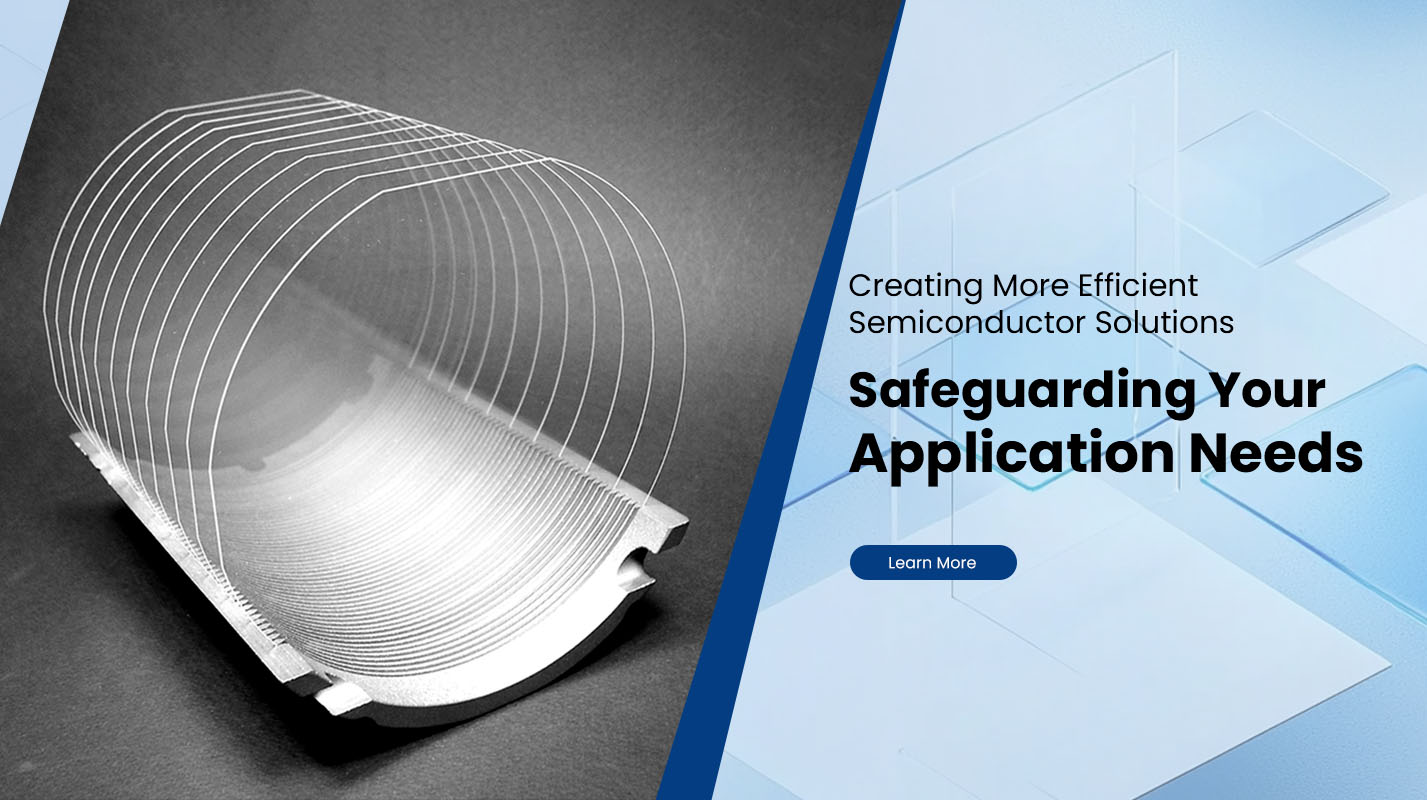
At Plutosemi, precision manufacturing of glass wafers is backed by advanced process control and deep expertise in MEMS manufacturing requirements. Our glass wafer production portfolio includes Single Crystal Glass Wafer options and custom glass substrate configurations tailored to specific device designs.
With precision grinding, polishing, and ultraclean surface finishing, our wafers meet rigorous flatness and surface quality specifications required in MEMS wafer fabrication. Plutosemi’s capacity for high-volume production ensures consistency and reliability, whether for research prototypes or large-scale deployment.
Supporting Advanced MEMS Fabrication
Plutosemi also offers integrated services that support wafer-level processing, including customization of glass thickness, laser drilling for through-glass vias, and preparation for bonding with other materials such as silicon. These capabilities reduce cycle times and support flexible manufacturing flows essential for modern MEMS sensors and devices.
Our commitment to quality, traceable measurement, and responsive production scales positions us as a reliable MEMS glass substrate partner, enabling customers to meet performance and cost targets in competitive markets.
Conclusion
Glass wafers provide a powerful combination of transparency, electrical insulation, and chemical stability that enhances performance in MEMS applications. Their role in microfluidic integration, optical access, and high-frequency signal integrity makes them a strategic material choice for next-generation devices. As the wafer glass market grows and MEMS technologies evolve, working with a dedicated supplier like Plutosemi ensures access to high-quality glass substrates engineered for precision and reliability, powering innovation across industries.