
How Are Glass Wafers Fabricated?
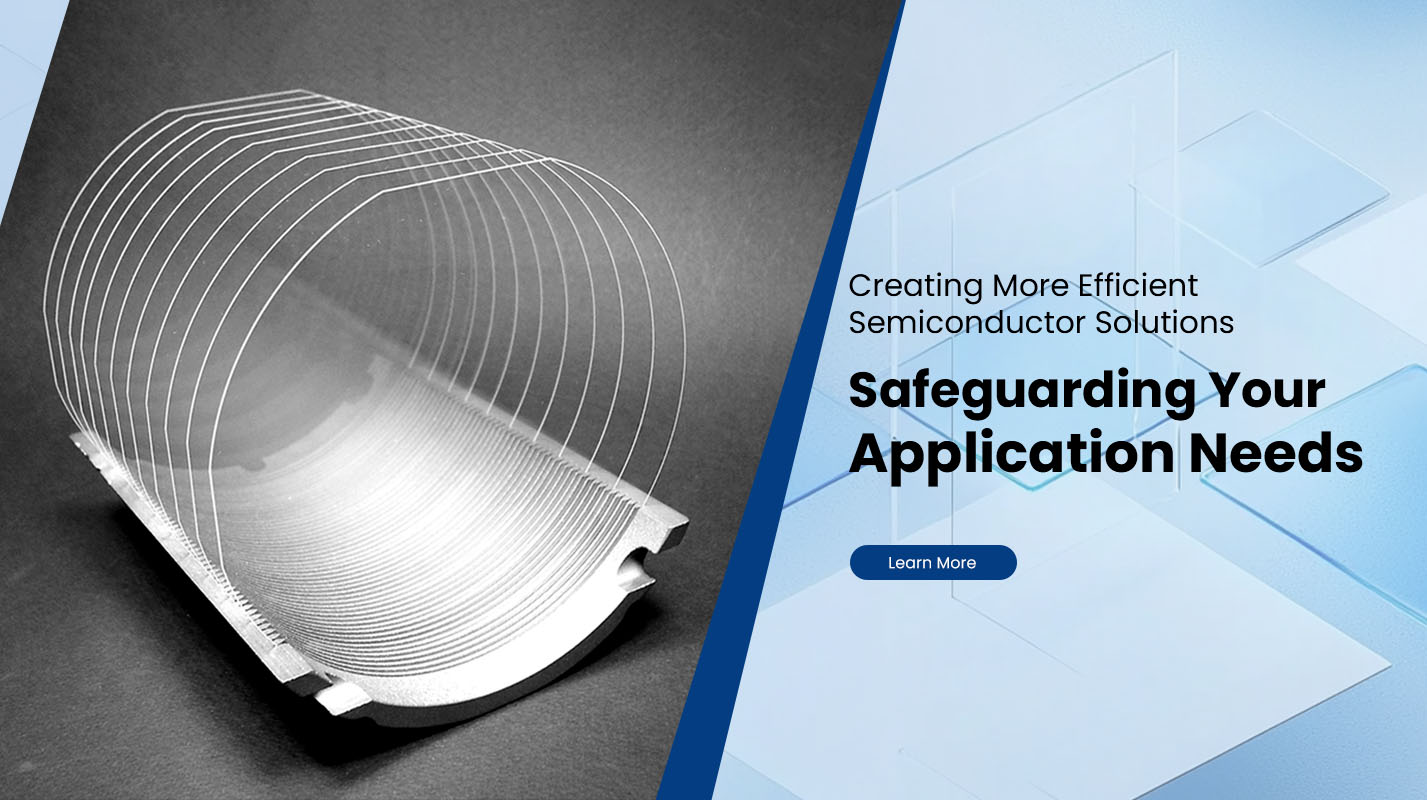
Glass Wafers play a critical role in modern semiconductor packaging, MEMS devices, optical components, and advanced sensor applications. Compared with traditional Silicon Wafers, glass wafers offer superior electrical insulation, excellent surface smoothness, low dielectric loss, and high thermal stability. Their fabrication process is highly controlled, involving multiple precision steps to ensure optical clarity, dimensional accuracy, and structural reliability.
Understanding the Role of Glass Wafers in Advanced Manufacturing
Glass wafers are engineered substrates typically made from borosilicate glass, aluminosilicate glass, or fused silica. These materials are selected for their low thermal expansion, chemical resistance, and compatibility with wafer-level processing. In semiconductor and photonic manufacturing, glass wafers are often used for interposers, carriers, microfluidic platforms, and optical integration structures where electrical isolation and transparency are required.
Raw Glass Material Preparation
The fabrication process begins with carefully selected glass compositions. Raw materials are melted at high temperatures exceeding 1,500°C to achieve a homogeneous glass melt. Strict control of composition ensures uniform refractive index, thermal expansion coefficients, and mechanical strength. Once melted, the glass is refined to remove bubbles and impurities that could compromise wafer quality.
Glass Sheet Forming and Initial Shaping
Molten glass is formed into flat sheets using precision rolling or float processes. These sheets are cooled in a controlled annealing environment to relieve internal stress. Annealing is a critical step, as residual stress can lead to wafer warpage or cracking during later processing stages. After annealing, the glass sheets are inspected for thickness uniformity and surface defects.
Wafer Cutting and Edge Profiling
Large glass sheets are then cut into circular wafers using high-precision laser cutting or diamond scribing techniques. The cutting process minimizes micro-cracks and chipping at the edges. Edge profiling follows, where chamfering or edge polishing is applied to improve mechanical strength and reduce breakage risk during handling and processing.
Grinding and Thickness Control
To meet tight dimensional tolerances, glass wafers undergo double-sided grinding. This step adjusts wafer thickness with micron-level precision. Advanced grinding systems ensure parallelism and flatness, which are essential for lithography alignment and bonding processes. Thickness control is especially important for applications such as wafer-level packaging and optical integration.
Polishing for Optical-Grade Surfaces
Chemical mechanical polishing is used to achieve ultra-smooth surfaces with nanometer-scale roughness. This process removes subsurface damage caused by grinding and produces optically clear surfaces suitable for photolithography and thin-film deposition. Surface roughness and flatness are continuously monitored to meet stringent industry standards.
Cleaning and Surface Conditioning
After polishing, wafers are thoroughly cleaned using multi-stage chemical and ultrasonic cleaning processes. These steps remove particles, organic residues, and metal contaminants. Surface conditioning treatments may also be applied to enhance bonding strength or improve compatibility with subsequent coatings and metallization layers.
Optional Processing and Customization
Depending on the application, additional processes may be introduced, including via drilling, laser patterning, or thin-film coating. Glass wafers can be customized for specific electrical, optical, or mechanical requirements. Manufacturers with advanced processing capabilities can support tight tolerances, complex geometries, and application-specific surface treatments.
Quality Inspection and Final Packaging
Before shipment, glass wafers undergo comprehensive inspection, including optical defect analysis, thickness measurement, flatness verification, and stress testing. Only wafers that meet defined specifications are approved for final packaging. Proper packaging ensures protection against contamination and mechanical damage during transportation.
Manufacturing Expertise and Industry Support
Reliable glass wafer fabrication requires advanced equipment, material expertise, and strict quality control. Companies such as Plutosemi provide professional semiconductor-related solutions with a focus on precision processing, material consistency, and application-driven customization. Their experience supports demanding industries including semiconductor packaging, MEMS, and advanced electronics manufacturing.
Conclusion
Glass wafer fabrication is a complex, multi-step process that transforms raw glass materials into high-precision substrates for advanced technologies. From melting and forming to polishing and inspection, every stage demands strict control and technical expertise. As demand for high-performance electronic and optical devices continues to grow, glass wafers will remain a key enabling material across multiple industries.