

What Is TGV Wafer Processing?
In the relentless pursuit of miniaturization and enhanced performance in electronics, Through-Glass Via (TGV) wafer technology has emerged as a foundational pillar for advanced packaging and integration. Moving beyond traditional silicon and organic substrates, TGV wafers utilize ultra-thin glass as a core material, enabling superior electrical performance, exceptional thermal stability, and high-density interconnects critical for next-generation applications.
Understanding TGV Wafer Technology
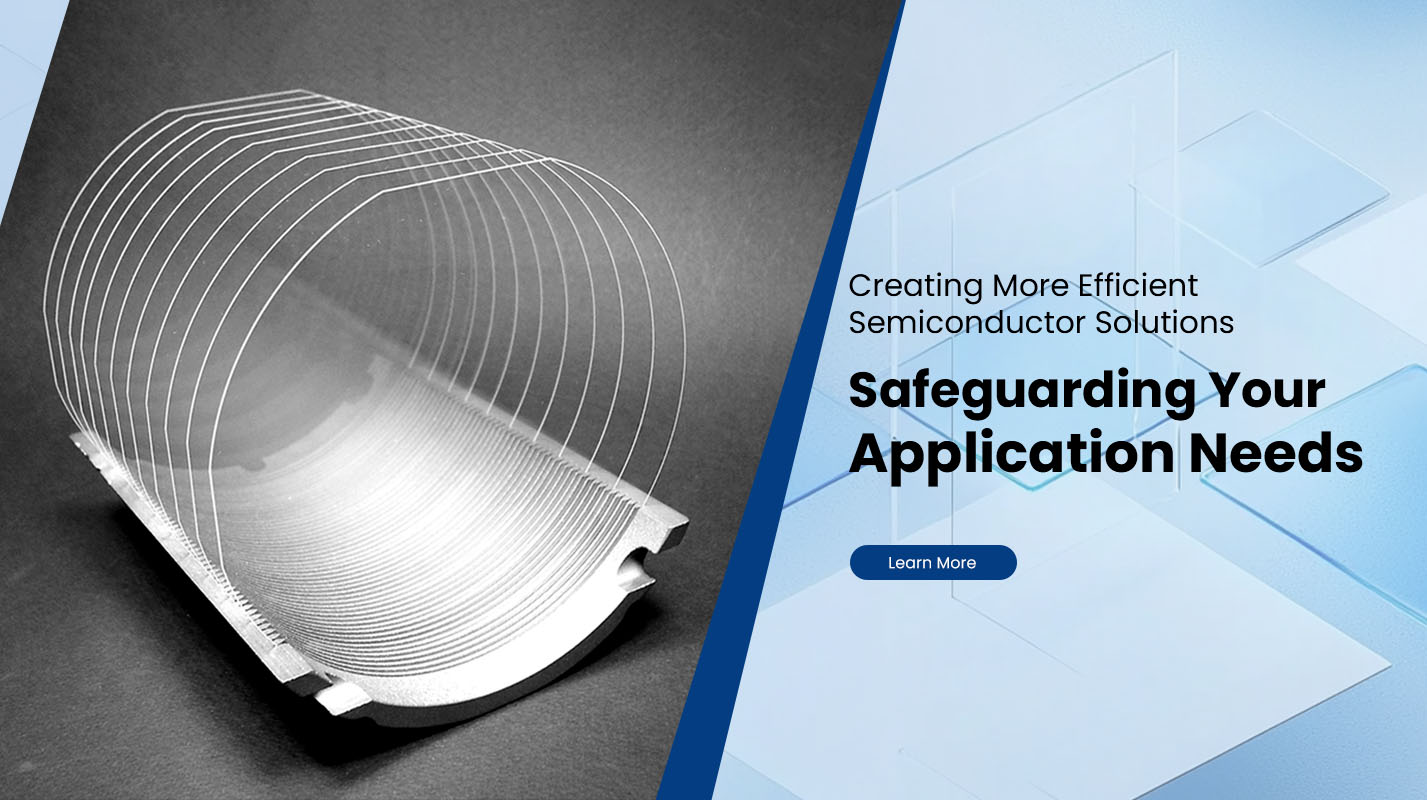
A TGV wafer is a thin glass substrate that contains a high-density array of vertical electrical interconnections passing completely through it. These vias facilitate the stacking and interconnection of semiconductor dies, sensors, or other components in a 3D architecture. The inherent properties of glass—including its excellent high-frequency electrical characteristics, dimensional stability, and ability to be manufactured in large, panel-level formats—make it uniquely suited for heterogeneous integration.
The primary applications driving TGV adoption are in high-performance sectors:
Radio Frequency (RF) Devices and 5G/6G Modules: The low electrical loss (low Df) and stable dielectric constant (Dk) of glass are crucial for minimizing signal attenuation and crosstalk in millimeter-wave circuits. Industry analysis indicates that the market for advanced RF substrates utilizing TGV-like technologies is projected to grow at a compound annual growth rate exceeding 15% through 2028.
MEMS and Sensor Packaging: Glass provides a hermetic seal, outstanding chemical resistance, and optical transparency ideal for MEMS accelerometers, gyroscopes, and optical sensors.
Advanced 3D Integration (2.5D/3D ICs): TGV interposers offer a compelling alternative to silicon interposers, providing comparable via density with better RF performance and potentially lower cost at panel-scale sizes.
Photonic Integrated Circuits (PICs): The transparency and smoothness of glass are perfect for aligning and packaging optical waveguides and lasers.
The Manufacturing Challenge: Core Steps in TGV Wafer Processing
Producing a reliable, high-yield TGV wafer is a complex, multi-step process that demands precision at every stage. Each step directly impacts the final electrical performance, mechanical integrity, and yield of the component.
1. Via Formation: Laser-Assisted Etching
The process begins with creating high-aspect-ratio holes in the glass substrate. While various methods exist, a leading-edge approach combines laser modification with chemical etching. A focused laser beam selectively treats the glass structure along the desired via path. The substrate is then immersed in a chemical etchant, which removes the laser-modified material at a significantly faster rate than the untreated glass, forming a clean, tapered via. This method allows for precise control over via diameter, taper angle, and sidewall roughness—a critical factor for subsequent metallization. Typical via diameters range from 10 to 100 micrometers, with densities over 10,000 vias per square centimeter achievable.
2. Sidewall Metallization and Conformal Filling
Creating an electrical path through the via requires depositing a uniform conductive layer. This is a major technical hurdle due to the high aspect ratio and the non-conductive, smooth nature of glass.
Seed Layer Deposition: A thin, adhesive metal layer (such as titanium or chromium) is first applied to the entire wafer, followed by a copper seed layer, using techniques like physical vapor deposition (PVD). This step ensures adhesion and provides initial conductivity.
Via Filling: The primary conductive material, almost always copper for its excellent conductivity, is then built up using electroplating. Achieving void-free, conformal filling in high-aspect-ratio glass vias requires precise control over plating chemistry, current density, and fluid dynamics. Incomplete filling can lead to voids that cause reliability failures under thermal stress.
3. Surface Redistribution Layer (RDL) Patterning
Once the vias are filled, a network of fine-pitch metallic traces is fabricated on the top and bottom surfaces of the wafer to route signals between vias and component attachment points. This involves patterning a photoresist, plating copper traces, and subsequently etching away the seed layer. The line/space resolution of this RDL is a key determinant of interconnection density, with leading-edge processes achieving features below 2 micrometers.
4. Planarization, Finalization, and Testing
Chemical-mechanical polishing (CMP) is used to remove excess copper overburden and planarize the surface, ensuring a flat, uniform topography for subsequent bonding steps. Final under-bump metallization (UBM) pads are then formed. Rigorous electrical testing, including continuity and isolation checks for thousands of vias, is performed to validate wafer performance before shipment.
The table below summarizes key parameters that define TGV wafer performance and must be tightly controlled during manufacturing:
| Parameter | Target Range | Impact on Performance |
|---|---|---|
| Via Diameter | 10 µm - 100 µm | Determines interconnection density and current-carrying capacity. |
| Via Sidewall Roughness (Ra) | < 200 nm | Critical for uniform metallization adhesion and plating; high roughness can lead to voids or cracks. |
| Copper Resistivity in Via | ≤ 2.0 µΩ·cm | Lower resistivity reduces signal loss and power consumption. |
| Dielectric Constant (Dk) @ 10 GHz | ~5.3 (for borosilicate) | Impacts signal propagation speed and impedance matching. |
| Dissipation Factor (Df) @ 10 GHz | < 0.004 | Lower Df minimizes high-frequency signal attenuation. |
Partnering with a Specialized Manufacturer: The Plutosemi Advantage
Navigating the complexities of TGV manufacturing requires a partner with deep process expertise and vertically integrated capabilities. Plutosemi specializes in the end-to-end fabrication of high-performance TGV wafers, transforming advanced glass substrates into reliable interposer cores.
The primary advantage lies in a tightly controlled, proprietary process flow that addresses the core challenges of TGV fabrication. From the initial laser and etching parameters that define the via morphology to the precise electroplating chemistry that ensures void-free copper filling, every variable is meticulously managed. This control is enabled by advanced in-line metrology tools that monitor critical dimensions, sidewall quality, and copper uniformity in real-time, allowing for process correction and guaranteeing batch-to-batch consistency.
Furthermore, manufacturing scalability is designed into the process. By optimizing for both standard wafer formats (e.g., 200mm, 300mm) and larger panel sizes, production can be scaled efficiently to meet volume demands without compromising on the precision required for high-density interconnects. This scalability, combined with a failure analysis and quality assurance protocol that meets stringent automotive and telecommunications standards, ensures that the TGV wafers integrate seamlessly into the most demanding packaging workflows. The result is a component that delivers on the theoretical promise of glass-based interposers: enabling higher bandwidth, greater integration density, and enhanced reliability for the systems that depend on them.
Previous: How to Inspect Wafer Quality?