

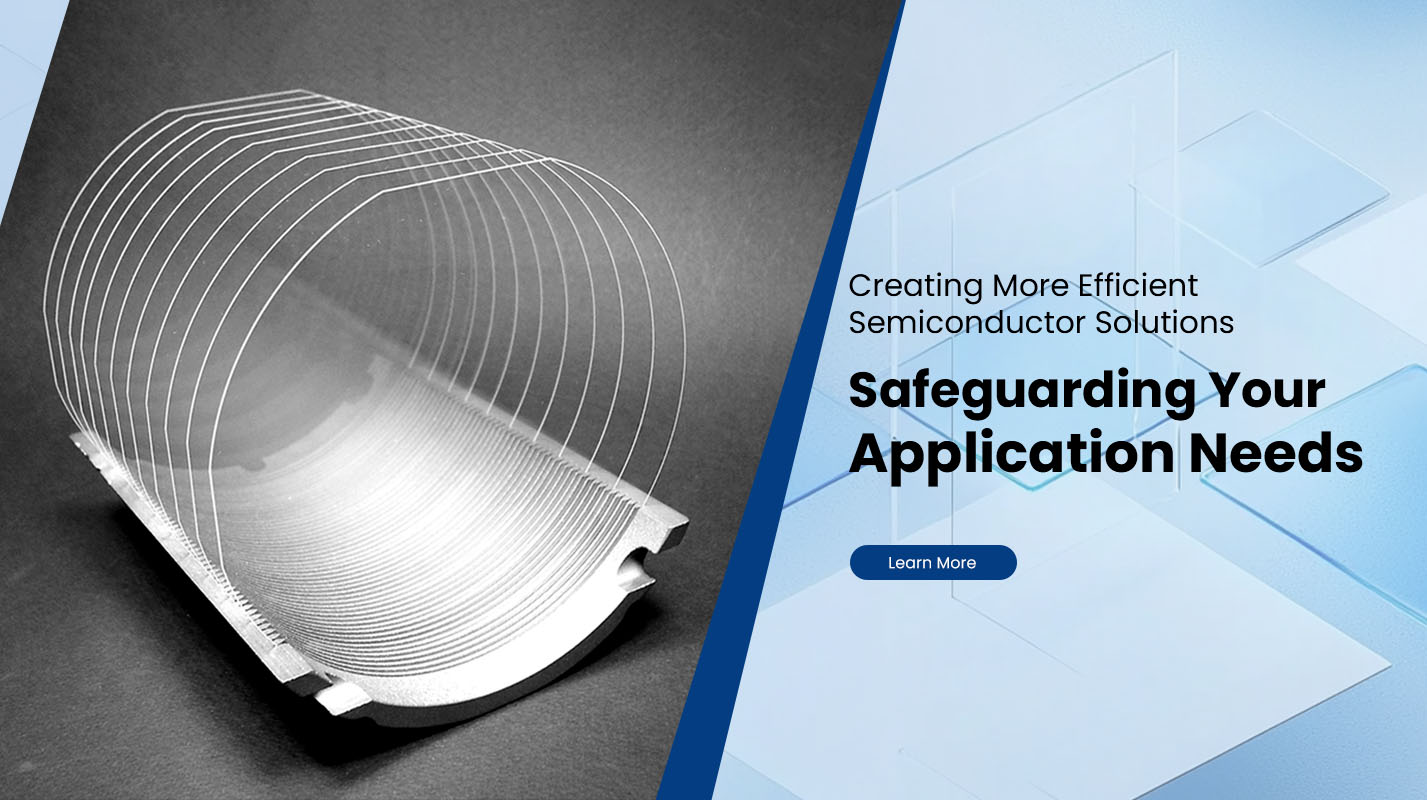
How Thick Is a Solar Wafer?
In the photovoltaic industry, the thickness of a solar wafer is not merely a dimensional specification—it represents a fundamental engineering compromise between material efficiency, mechanical stability, and electrical performance. This delicate balance determines how effectively sunlight is converted into usable electricity and influences the durability of the entire solar module. As a leading manufacturer of high-performance semiconductor materials, we understand that thickness is a core parameter impacting everything from cell efficiency and manufacturing yield to the total system cost. Solar Wafers serve as the essential substrate upon which the photovoltaic effect is built, making their physical and electrical characteristics critical to the success of the final product.
Historically, solar wafers have undergone a significant thinning trend. From standard thicknesses well above 200 microns several years ago, the industry has continuously innovated to reduce material use while maintaining or enhancing performance. This drive towards thinner wafers is primarily motivated by the desire to reduce silicon consumption, which constitutes a substantial portion of a solar cell's cost. However, this pursuit is carefully bounded by the need to maintain mechanical integrity during handling and processing and to ensure the wafer can effectively support the generation and collection of electrical current. Today's advanced manufacturing focuses on producing wafers that are optimally thin, uniform, and defect-free to maximize the performance of the final photovoltaic module.
Standard Thickness Ranges and Industry Trends
The solar industry has largely converged on specific thickness ranges that represent the current optimal balance of cost and performance for mainstream manufacturing. For monocrystalline Silicon Wafers, which dominate the high-efficiency segment of the market, the standard thickness now typically falls between 160 and 180 microns. polycrystalline silicon wafers, which follow a different manufacturing process, often remain slightly thicker, commonly in the range of 180 to 200 microns. These dimensions are the result of years of process refinement and have become the baseline for most commercial photovoltaic production.
A key trend, however, is the industry's push towards even thinner formats. Advanced production lines are now capable of handling wafers down to 150 microns and even thinner for specific high-efficiency cell designs like heterojunction (HJT) or interdigitated back contact (IBC) cells. The table below outlines the common thickness specifications and their associated applications:
| Wafer Type | Typical Thickness Range | Primary Applications & Notes |
|---|---|---|
| Monocrystalline (Mono-Si) | 150 - 180 microns | Standard PERC, TOPCon, and advanced cell architectures. Thinner wafers (150-160µ) used for premium efficiency. |
| Polycrystalline (Poly-Si) | 180 - 200 microns | Cost-optimized standard modules. Thickness provides robust mechanical handling. |
| Thin-Film Substrates | Varies (non-Si) | Technologies like CIGS or CdTe; thickness not directly comparable to silicon wafers. |
This ongoing thinning is enabled by improvements in wafer slicing technology, such as diamond-wire sawing, and enhanced cell processing techniques that minimize stress and breakage. The ultimate goal is to achieve what is often termed "wafer equivalency," where a thinner wafer performs identically to a thicker one in the finished module, thereby delivering the same power output with significantly less raw material.
Key Thickness Metrics and Quality Control
When specifying solar wafer thickness, it is insufficient to provide a single average number. The spatial uniformity of thickness across the wafer is equally critical for high-yield cell manufacturing. This is defined by three key geometrical parameters: Thickness Variation (TTV), Bow, and Warp. Controlling these parameters is a primary focus during wafer production and a major differentiator in supplier quality.
Total Thickness Variation (TTV) measures the difference between the maximum and minimum thickness on a single wafer. A low TTV value, often targeted at less than 15 microns for premium wafers, is essential for subsequent patterning and metallization steps. High TTV can lead to poor film uniformity, breakage in automated handling, and ultimately, lower cell conversion efficiency. Bow and Warp describe the deviation of the wafer's center from a reference plane. Bow is typically a spherical deformation, while Warp can be more complex. Excessive Bow or Warp causes poor contact with manufacturing equipment, leading to process failures and cracked wafers.
At Plutosemi, our production philosophy of "Quality Foremost" is built on precise control over these parameters. We employ advanced metrology and process controls to ensure that every solar wafer not only meets the target thickness but also exhibits exceptional uniformity and flatness. This commitment to geometrical perfection minimizes downstream production losses for our partners, ensuring that more wafers successfully complete the journey to becoming high-efficiency solar cells.
The Manufacturer's Perspective: Balancing Thickness with Performance
From a manufacturing standpoint, producing thinner wafers presents a distinct set of challenges that must be expertly managed. The primary challenge is mechanical fragility. As wafers become thinner, they are more susceptible to cracking and breakage during slicing, cleaning, texturing, and transportation. Overcoming this requires not only precise sawing technology but also optimized handling systems and packaging solutions throughout the supply chain. Furthermore, thinner wafers can exhibit different thermal and stress behaviors during the high-temperature steps of cell fabrication, such as diffusion and coating, which must be accounted for in the process design.
However, the advantages are compelling and drive continuous innovation. The most significant benefit is reduced silicon material cost. Silicon is a major cost component, and using less material per wafer directly lowers production expense. There are also potential electrical benefits: thinner wafers can offer reduced bulk recombination of charge carriers in some cell designs, potentially leading to slight efficiency gains, especially for technologies with excellent surface passivation. The industry's trajectory is clear, and the capability to produce robust, high-yield thinner wafers is a marker of a manufacturer's technical prowess.
Our approach integrates advanced material science with stringent process control. We specialize in providing wafers that meet precise specifications for thickness and geometry, supported by our certifications in high-performance semiconductor material R&D and production. This expertise allows us to offer reliable, consistent wafers that form a trustworthy foundation for our customers' photovoltaic innovations.
Implications for Photovoltaic Cell and Module Efficiency
The thickness of the wafer directly influences the final solar cell's performance characteristics. A key principle is that a silicon wafer must be thick enough to absorb a sufficient portion of the incoming sunlight. Silicon has a specific absorption coefficient, meaning photons of different wavelengths penetrate to different depths. While most blue light is absorbed near the surface, red and infrared light can travel deeper. A wafer that is too thin may fail to capture these longer wavelengths, leading to a loss in current and overall efficiency.
Conversely, a wafer that is excessively thick provides diminishing returns on absorption while increasing material cost. More importantly, the extra thickness can increase the probability that generated electrons will recombine before they can be collected at the cell's electrical contacts—a phenomenon known as bulk recombination. Therefore, the optimal thickness is carefully calculated to maximize light absorption and charge collection while minimizing recombination and material use. This optimum shifts with different cell architectures; for instance, cells with advanced light-trapping textures or back-surface reflectors can maintain high absorption with thinner wafers.
For module reliability, wafer thickness and quality directly affect mechanical load performance and long-term resistance to environmental stress such as wind, snow, and hail. Wafers with excellent uniformity and controlled Bow/Warp contribute to a more mechanically robust module that is less prone to micro-cracks over its 25+ year lifespan. By sourcing wafers with precisely controlled thickness and superior geometry, cell and module manufacturers can build products that deliver both high initial performance and enduring reliability in the field.
Selecting the Right Wafer Partner
Choosing a supplier for solar wafers is a strategic decision that extends far beyond comparing a single thickness specification on a datasheet. It involves partnering with a manufacturer whose core competencies align with the demands of advanced photovoltaic production. The ideal partner demonstrates mastery over the entire wafer production process, ensuring not just a target average thickness but exceptional consistency in TTV, Bow, and Warp across every batch. This geometrical precision is what enables high yields in automated, high-speed cell production lines.
A manufacturer's commitment to research and development is a critical indicator of future capability. The industry's thinning trend will continue, and the supplier must be at the forefront of developing processes for handling next-generation wafer formats. Furthermore, the ability to provide customized solutions and technical support is invaluable. Different cell technologies may have unique substrate requirements, and a collaborative supplier can tailor their product to help unlock higher efficiencies or more cost-effective manufacturing.
As a specialized manufacturer of semiconductor materials, we have built our reputation on the philosophy of "Customer First, Quality Foremost." Our focus is on delivering high-precision silicon wafers that provide a reliable and high-performance foundation. We maintain rigorous standards from crystal growth to final slicing and inspection, ensuring that each wafer meets the exacting demands of modern photovoltaic manufacturing. This dedication to quality and performance makes our wafers a trusted component for producers aiming to lead in the competitive solar energy market.
Previous: