
What Is Silicon Wafer?
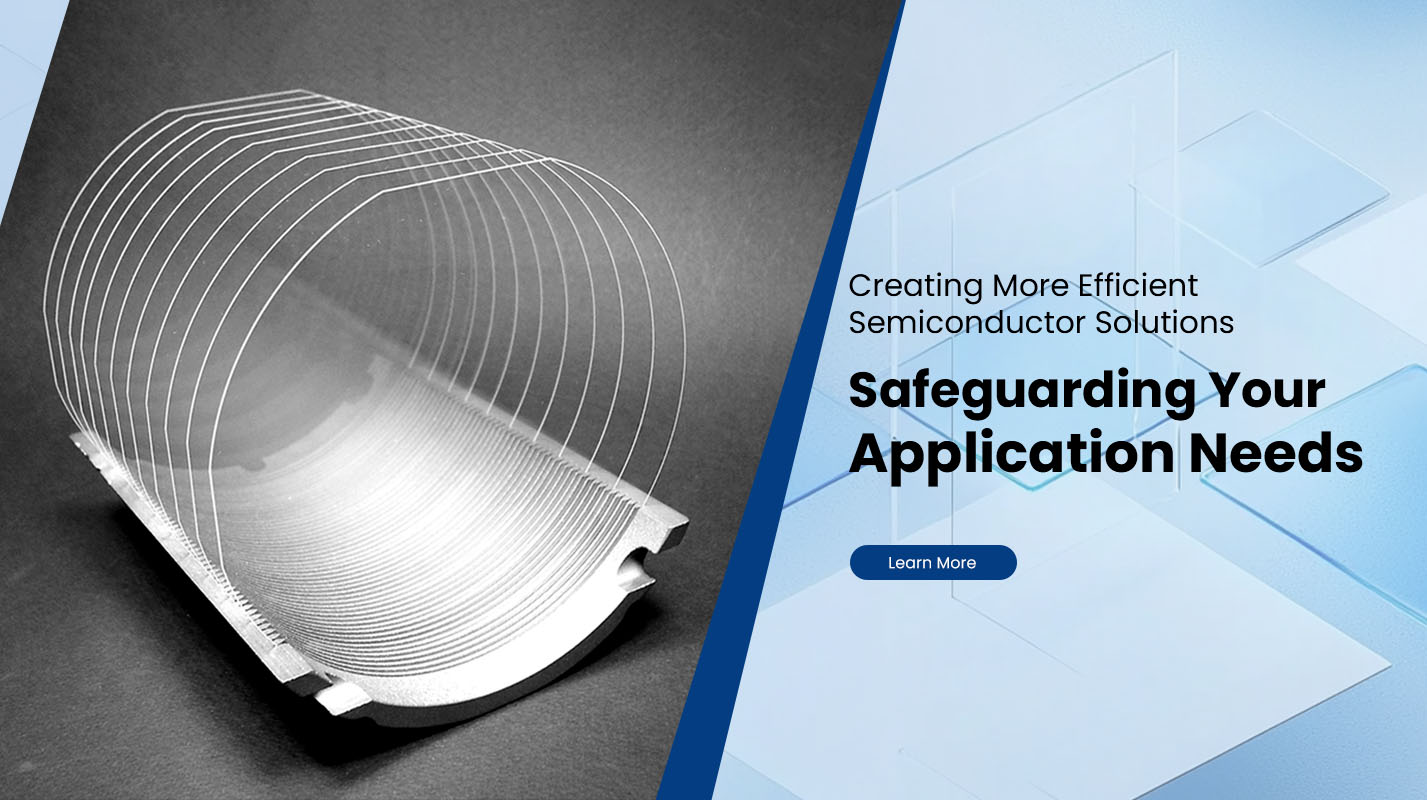
A Silicon Wafer is a thin, circular slice of single-crystal silicon used as the base material for building integrated circuits, sensors, power devices, MEMS structures, and many other semiconductor components. In practical production, it is the physical platform on which hundreds or thousands of chips can be created through repeated steps such as oxidation, deposition, lithography, etching, doping, and metallization. Brigham Young University describes a wafer as a circular slice cut from a single-crystal ingot, and notes that standard silicon wafer diameters range from 25.4 mm to 300 mm.
Silicon remains the dominant wafer material because its physical and electrical properties are well suited to large-scale semiconductor manufacturing. According to PV Education, silicon has a density of 2.328 g per cubic centimeter, an energy bandgap of 1.1242 eV, a melting point of 1415 degrees Celsius, and thermal conductivity of 150 W per meter per kelvin. These values help explain why silicon performs reliably in device fabrication and why it has remained the foundation of mainstream semiconductor production for decades.
Why silicon wafers matter in semiconductor manufacturing
A wafer is not the final product. It is the starting substrate that determines how stable the following process will be. Wafer flatness, thickness uniformity, surface roughness, crystal orientation, resistivity, and defect control all influence lithography accuracy, film quality, yield, and final device performance. BYU notes that high-quality silicon wafers can reach surface roughness better than 0.1 nm, while total thickness variation and warp are also critical parameters in process control.
The business scale behind silicon wafers also shows their importance. SEMI reported that worldwide silicon wafer shipments reached 12,973 million square inches in 2025, while wafer revenue reached 11.4 billion US dollars. That level of volume reflects how deeply wafers are tied to logic, memory, sensors, automotive electronics, industrial control, and AI infrastructure.
How a silicon wafer is made
Silicon wafer production starts with high-purity silicon, which is melted and grown into a single-crystal ingot. For large-diameter wafers, the Czochralski method is the mainstream route. BYU states that this is the most common method for obtaining large-diameter semiconductor wafers and that high-end silicon microelectronics wafers are almost uniquely grown by this method. After crystal growth, the ingot is shaped, sliced, ground, polished, cleaned, and inspected before entering device fabrication.
During this process, material control is not limited to shape. Doping is introduced to create p-type or n-type conductivity, crystal orientation is defined through Miller indices such as 100 and 111, and edge quality is managed to reduce breakage risk during handling. These are not minor details. They directly affect device architecture, thermal behavior, process compatibility, and long-term stability in production.
Common wafer sizes and what they mean
Wafer diameter is one of the first specifications engineers check because it affects equipment compatibility, die output, and cost structure. Standard diameters listed by BYU include 100 mm, 125 mm, 150 mm, 200 mm, and 300 mm. A 300 mm wafer offers 2.25 times the surface area of a 200 mm wafer, which is why larger wafers are strongly linked to high-volume manufacturing efficiency when the process platform supports them.
| Wafer size | Typical use direction | Key consideration |
|---|---|---|
| 100 mm to 150 mm | Research, specialty devices, pilot work | Flexible for smaller-scale process development |
| 200 mm | Mature nodes, analog, MEMS, power devices | Broad installed equipment base |
| 300 mm | Advanced high-volume production | Higher output efficiency per wafer |
This size decision should be matched with process maturity, equipment availability, and product roadmap rather than selected by diameter alone. The right wafer is the one that supports the complete manufacturing path with stable quality and repeatable results.
What buyers should evaluate beyond the word silicon wafer
Not all silicon wafers are interchangeable. Key evaluation points include diameter, thickness, crystal orientation, resistivity range, surface finish, flatness, bow, warp, total thickness variation, particle control, edge profile, and whether the wafer is prime, test, epitaxial, or SOI grade. BYU defines prime grade as the highest grade of silicon wafer and identifies wafer bonding and SIMOX as important routes in SOI-related structures.
For many projects, consistency matters more than a single attractive specification. Stable incoming quality helps reduce process drift, lowers rework risk, and supports better repeatability in downstream fabrication. This is especially important for applications that depend on ultra-flat surfaces, precise thickness control, or advanced substrate engineering.
What Plutosemi offers from a manufacturing perspective
Plutosemi focuses on high-performance semiconductor materials and presents silicon wafers, SOI, epitaxial wafers, Glass Wafers, quartz substrates, and related advanced materials within one supply system. According to its website, the company was founded in 2019, operates three production bases in China, and has monthly capacity of 100,000 equivalent 6-inch silicon wafers plus 30,000 equivalent 8-inch glass wafers. The site also highlights ultra-thin, ultra-flat, and high-precision wafer capabilities, along with one-stop service and flexible processing support.
That combination is meaningful in real sourcing work. It supports technical alignment from substrate selection to custom processing, while also improving supply continuity for programs that need steady specifications over time. Plutosemi also lists products such as Mirror Polished Silicon Wafers and Ultra Flat Silicon Wafers, which shows its focus on applications where surface quality and dimensional control are essential.
Conclusion
A silicon wafer is the core substrate that makes semiconductor manufacturing possible. Its value comes from far more than the material name alone. Crystal quality, geometry, surface condition, electrical properties, and process compatibility all shape the final outcome. As global wafer shipments returned to growth in 2025, the importance of secure supply and precise substrate control became even more visible across the semiconductor chain.
For projects that require stable wafer quality, tailored specifications, and coordinated material support, Plutosemi brings together manufacturing capacity, precision wafer capability, and a broader semiconductor materials portfolio. That makes the discussion around silicon wafers more practical, more technical, and more aligned with actual production needs.
Previous: