
How Are Silicon Wafers Manufactured From Ingot To Polished Wafer?
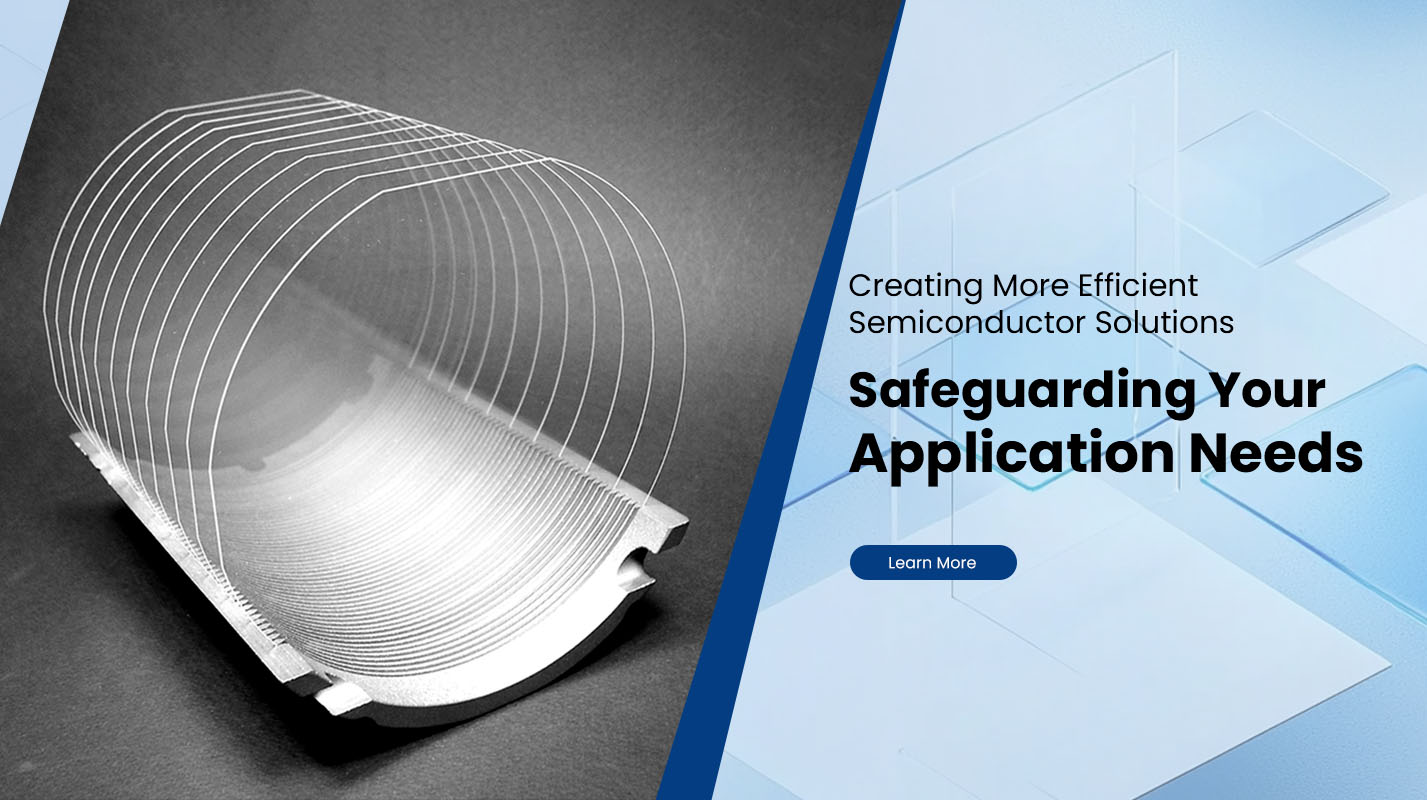
Silicon Wafers sit at the foundation of modern chips, and the quality of the starting wafer often shapes yield, stability, and downstream process consistency. For buyers evaluating silicon wafer manufacturing, it is useful to understand that a polished wafer is not created in a single step. It moves through crystal preparation, ingot growth, wire slicing, flattening, polishing, cleaning, and final inspection before it is ready for semiconductor fabrication. According to SEMI, global silicon wafer shipments reached 12,266 million square inches in 2024, and the market began recovering in late 2024, which shows how important stable wafer supply remains across the industry.
Plutosemi positions itself around this need for consistency. On its website, the company states that it operates three production bases in China and offers monthly capacity of 100,000 equivalent 6-inch silicon wafers, along with one-stop services covering multiple semiconductor material categories. That matters because wafer buyers usually need more than a single size or finish. They need repeatable geometry, reliable delivery, flexible specifications, and packaging that protects surface quality from factory to fab.
Step 1: Crystal Growth Starts The Wafer Journey
The first major stage in the silicon wafer production process is crystal growth. High-purity polycrystalline silicon is loaded into a quartz crucible, melted at high temperature, and then grown into a single crystal ingot. This stage determines the crystal structure that later affects resistivity uniformity, orientation accuracy, and defect control. Industry wafer producers describe this as the point where raw silicon becomes a usable single crystal body for precision slicing and downstream finishing.
For buyers, this is where specification discipline begins. Orientation, dopant type, resistivity range, and target diameter are not later corrections. They are set upstream. Plutosemi also highlights high-precision silicon wafers and customized solutions, which is important when projects require different wafer grades for MEMS, sensors, power devices, or research applications.
Step 2: Ingot Shaping And Slicing Turn Crystal Into Individual Wafers
After growth, the ingot is ground and cropped so the outer surface becomes uniform and suitable for slicing. From there, wire sawing cuts the ingot into individual wafers. SEMI notes that polished single crystal silicon wafers are usually sliced from cylindrical ingots that have already been ground to a uniform diameter prior to slicing. This is a critical detail because dimensional control starts before a wafer even becomes a wafer.
Slicing is also where a manufacturer balances throughput and damage control. A thinner cut can improve material utilization, but the sliced wafer surface still carries saw marks and mechanical stress. That is why buyers asking how silicon wafers are made should never think of sawing as the final shape step. It is only the transition from bulk crystal to wafer blank.
Step 3: Lapping, Etching, And Grinding Build Flatness
Once the wafer is sliced, the surface must be corrected. Lapping smooths and flattens the wafer. Etching removes process damage from the surface by chemical reaction. Double-side grinding then removes small surface irregularities and improves total geometry. These steps are essential because a wafer with poor flatness or thickness variation can create major issues in lithography, deposition, and bonding steps later in the line.
This is also where quality discussions become more technical. Plutosemi notes that diameter, thickness, TTV, roughness, crystal orientation, particle control, edge quality, and packaging method all matter during wafer procurement. That reflects real buyer concerns. A wafer is not judged by diameter alone. It is judged by how well all geometric and surface indicators work together in production.
Step 4: Wafer Polishing Creates The Mirror Surface
The wafer polishing stage gives the wafer its final mirror-like surface. Siltronic describes polished wafers as extremely flat, with a virtually perfect surface produced through chemical-mechanical polishing. In practical terms, polishing removes fine bumps and produces the surface quality required for advanced device processing. For prime wafers, at least one chem-mechanically polished surface is part of the accepted specification framework under SEMI M1.
From a manufacturing perspective, polishing is not just cosmetic. It directly affects surface roughness, particle behavior, and the readiness of the wafer for epitaxy, oxidation, photolithography, or thin-film deposition. When buyers compare suppliers, this is often where differences in process discipline become visible through flatness, warp, bow, and defect inspection results.
Step 5: Cleaning, Inspection, And Secure Shipping Protect Yield
After polishing, wafers move through cleaning and inspection. Industry process descriptions identify cleaning as the removal of impurities from the wafer surface, followed by inspection of shape, flatness, and surface defects, including particle counting. These final controls are essential because contamination introduced at the last stage can erase the value created by all earlier steps.
Shipping protection is part of the manufacturing conversation as well. Plutosemi specifically highlights packaging method as a purchasing factor, which is a practical reminder that wafers must arrive with their polished surfaces protected from shock, dust, and humidity. For certain logistics needs, using a Polypropylene Single Silicon Wafer Shipper can help maintain transport safety for individual wafers and reduce handling risk between outgoing inspection and customer-side receiving.
What Buyers Should Check At Each Stage
| Stage | Main Control Point | Why It Matters |
|---|---|---|
| Crystal growth | Orientation, resistivity, crystal integrity | Affects device compatibility and electrical consistency |
| Slicing | Diameter accuracy, thickness target, surface damage | Influences material utilization and downstream correction load |
| Lapping and grinding | Flatness, TTV, edge quality | Supports process stability in later fab steps |
| Polishing | Surface roughness, mirror finish, defect reduction | Prepares wafer for high-quality device processing |
| Cleaning and inspection | Particles, warp, bow, final appearance | Protects incoming yield and receiving consistency |
The table above aligns with SEMI purchasing considerations and industry wafer process descriptions. It also matches the way serious wafer programs are evaluated in practice, where geometry, polish quality, and contamination control are treated as linked variables rather than separate checklist items.
Why Process Integration Matters
A reliable supplier does more than complete isolated process steps. It manages the full chain so that crystal growth, slicing, flattening, polishing, inspection, and packaging work as one controlled system. That is where Plutosemi’s positioning becomes relevant. The company presents itself as a supplier of silicon wafers, SOI, and related semiconductor materials with one-stop service, customized solutions, and production capacity built for stable delivery. For customers managing qualification timelines or repeat orders, that kind of integration can reduce sourcing complexity and improve consistency across lots.
Understanding how silicon wafers are made helps buyers evaluate more than price. It helps them judge whether a supplier can control the entire path from ingot to polished wafer with the precision that modern semiconductor fabrication demands. From crystal growth to final wafer polishing, each step adds value only when the previous one is tightly controlled. That is why the best wafer partner is not simply a seller of substrates, but a manufacturer able to turn process discipline into dependable wafer performance.