

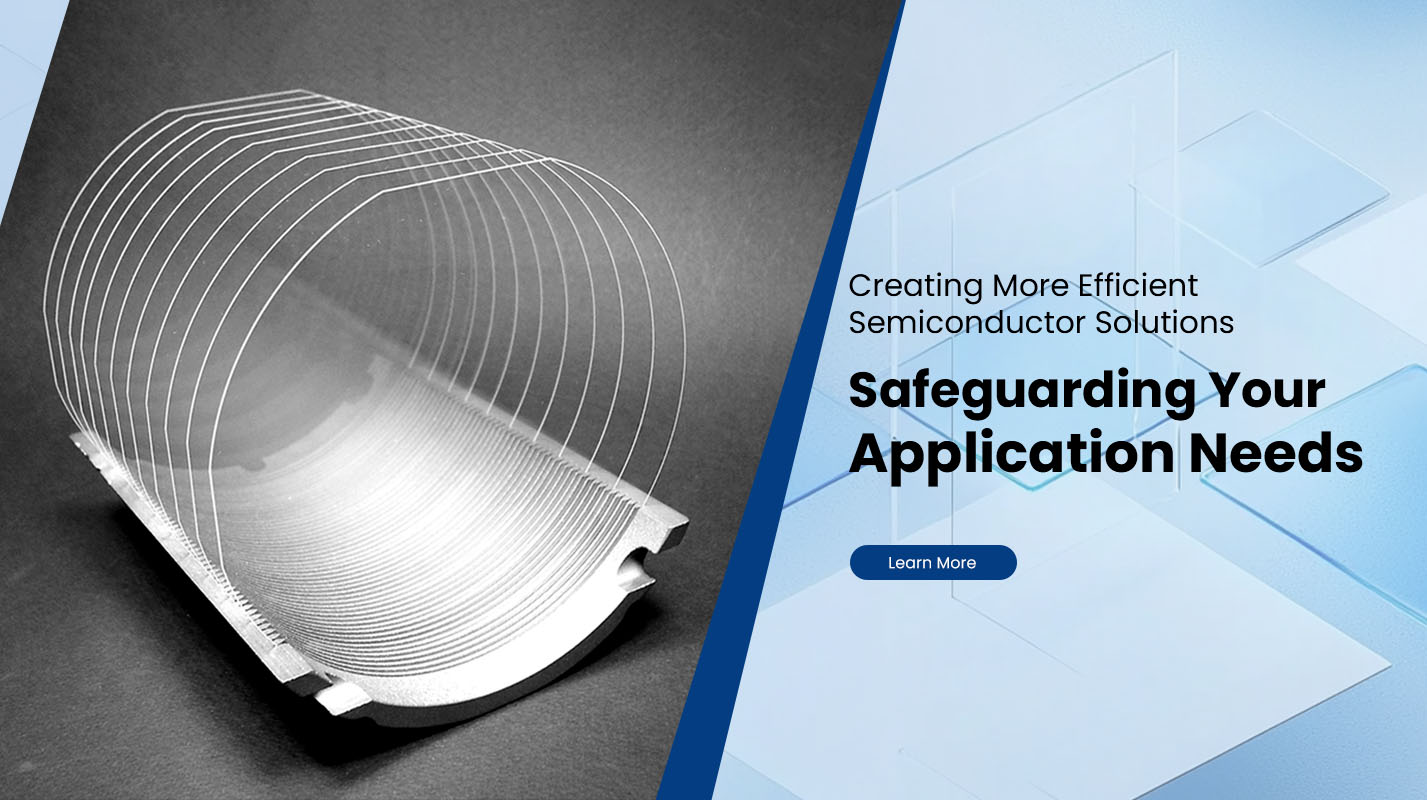
How to Store Semiconductor Wafers Safely?
Semiconductor wafers can lose value before processing even begins if storage conditions are not controlled. Dust, moisture, electrostatic discharge, poor packaging pressure, and unstable temperature may create surface contamination, oxidation, edge damage, or hidden defects. For fabs, laboratories, MEMS manufacturers, optical companies, and device developers, safe wafer storage is part of quality control, not just warehouse management.
A good storage plan should protect three things at the same time: surface cleanliness, physical integrity, and batch traceability. This is especially important when wafers need to wait before deposition, bonding, lithography, inspection, or research use.
Why Wafer Storage Conditions Matter
Wafers often have polished, etched, coated, or patterned surfaces. These surfaces are sensitive to particles, moisture, organic residues, and handling marks. Even a small particle can cause measurement error, poor film adhesion, bonding failure, or device yield loss.
Semiconductor wafer storage requirements usually focus on clean packaging, stable humidity, suitable temperature, ESD protection, and minimal direct contact with the wafer surface. The exact standard depends on wafer material, diameter, surface finish, coating status, and final process.
For polished Silicon Wafers, Sapphire Wafers, quartz wafers, SiC wafers, GaAs wafers, and Glass Wafers, storage should be planned according to both material behavior and downstream process sensitivity.
Control Temperature And Humidity
Temperature and humidity are the first storage conditions buyers should confirm. Many wafer handling references recommend controlled room temperature rather than hot, damp, or unstable warehouse conditions. Some wafer storage guidance uses 17°C to 28°C and 7% to 30% relative humidity for silicon wafer storage, while many cleanroom environments maintain around 20°C to 22°C with controlled humidity to reduce condensation and static risk.
High humidity can increase the risk of oxidation, moisture adsorption, corrosion on metal-coated surfaces, and packaging contamination. Extremely dry environments may increase electrostatic risk if grounding and ESD control are not properly managed. For long-term storage, dry nitrogen cabinets or sealed dry packaging are often used to reduce oxygen and moisture exposure.
| Storage Factor | Recommended Focus | Risk If Poorly Controlled |
|---|---|---|
| Temperature | Stable room-temperature storage | Stress change, condensation, material aging |
| Humidity | Low and controlled RH for sensitive wafers | Oxidation, moisture marks, corrosion |
| Atmosphere | Dry air or nitrogen for long-term storage | Surface reaction, contamination |
| Cleanliness | Sealed clean packaging | Particle deposition, surface defects |
| ESD control | ESD-safe boxes and handling | Static discharge, device damage |
Use Proper Wafer Boxes And Carriers
The storage box is not a simple container. It controls contact points, particle exposure, static risk, and movement during transport. A professional wafer storage box supplier should provide boxes matched to wafer diameter, thickness, material, and handling method.
For small and medium wafer sizes, cassette boxes, single wafer carriers, coin-style holders, and tray carriers may be used. For larger semiconductor production environments, FOUP and FOSB systems are widely used for 300 mm wafer movement and storage. A FOUP is mainly used inside automated fabs, while a FOSB is often used for shipment and transfer between facilities.
Good wafer boxes should support the wafer at safe contact areas, reduce surface touching, prevent wafer-to-wafer friction, and keep the wafer secure during movement. Conductive or ESD-safe polypropylene is commonly used for wafer carriers because it helps reduce static-related risk during cleanroom handling.
Avoid Direct Surface Contact
Manual handling is one of the most common causes of wafer damage. Fingerprints, glove powder, tweezer scratches, and edge chips may all reduce wafer usability. Operators should handle wafers only with cleanroom gloves, vacuum wands, wafer tweezers, or suitable automated tools.
For mirror polished wafers or coated wafers, the front surface should never be touched directly. Even when the wafer looks clean, organic residue may remain and affect later coating, bonding, or inspection. When wafers are removed from packaging, they should be processed or returned to a clean storage environment as soon as possible.
Separate Materials And Surface Types
Different wafer materials may need different storage care. Silicon wafers, quartz wafers, glass wafers, sapphire wafers, and Compound Semiconductor Wafers do not always respond the same way to moisture, mechanical stress, or chemical exposure. Coated wafers and patterned wafers are usually more sensitive than bare substrates.
Wafers should be separated by material, size, surface finish, lot number, and processing status. Mixing polished wafers with rough-ground wafers or coated wafers with bare wafers can create inspection confusion and contamination risk. Clear labeling also helps buyers manage incoming quality control and repeat orders.
Check Packaging For Bulk Orders
For repeat purchasing, storage safety must work at lot scale. One clean sample box is not enough. Bulk wafer orders require consistent packaging, stable box quality, accurate labeling, and safe carton arrangement. This is why buyers often review packaging before confirming a wafer storage bulk supplier.
For polished wafer bulk supply, packaging should reduce vibration, avoid excessive pressure, and keep each lot traceable. Labels should include material, diameter, thickness, orientation, surface finish, quantity, lot number, and inspection status. When international shipping is involved, outer cartons should also protect against humidity change, impact, and long-distance handling.
How Plutosemi Supports Safe Wafer Storage
Plutosemi supplies silicon wafers, SOI wafers, glass wafers, quartz substrates, sapphire wafers, SiC wafers, GaAs wafers, and other advanced wafer materials. Our team can review wafer size, polishing side, surface sensitivity, packaging method, and shipment plan before delivery.
For customers ordering samples or volume batches, we focus on clean packaging, suitable carriers, careful labeling, and stable lot management. As a wafer storage box supplier and wafer storage bulk supplier, we understand that storage protection must match the wafer’s final use, not only the wafer diameter.
Conclusion
Safe semiconductor wafer storage depends on controlled temperature, proper humidity, clean packaging, ESD-safe handling, suitable carriers, and clear batch traceability. Poor storage can create surface defects, contamination, oxidation, edge damage, and process instability before the wafer reaches production.
Buyers should treat semiconductor wafer storage requirements as part of the purchase specification. When storage conditions and packaging details are confirmed early, wafers are easier to protect from sample evaluation to repeat production.
Previous: What Should a Wafer Supplier Provide?