
Can Glass Wafers be Customized?
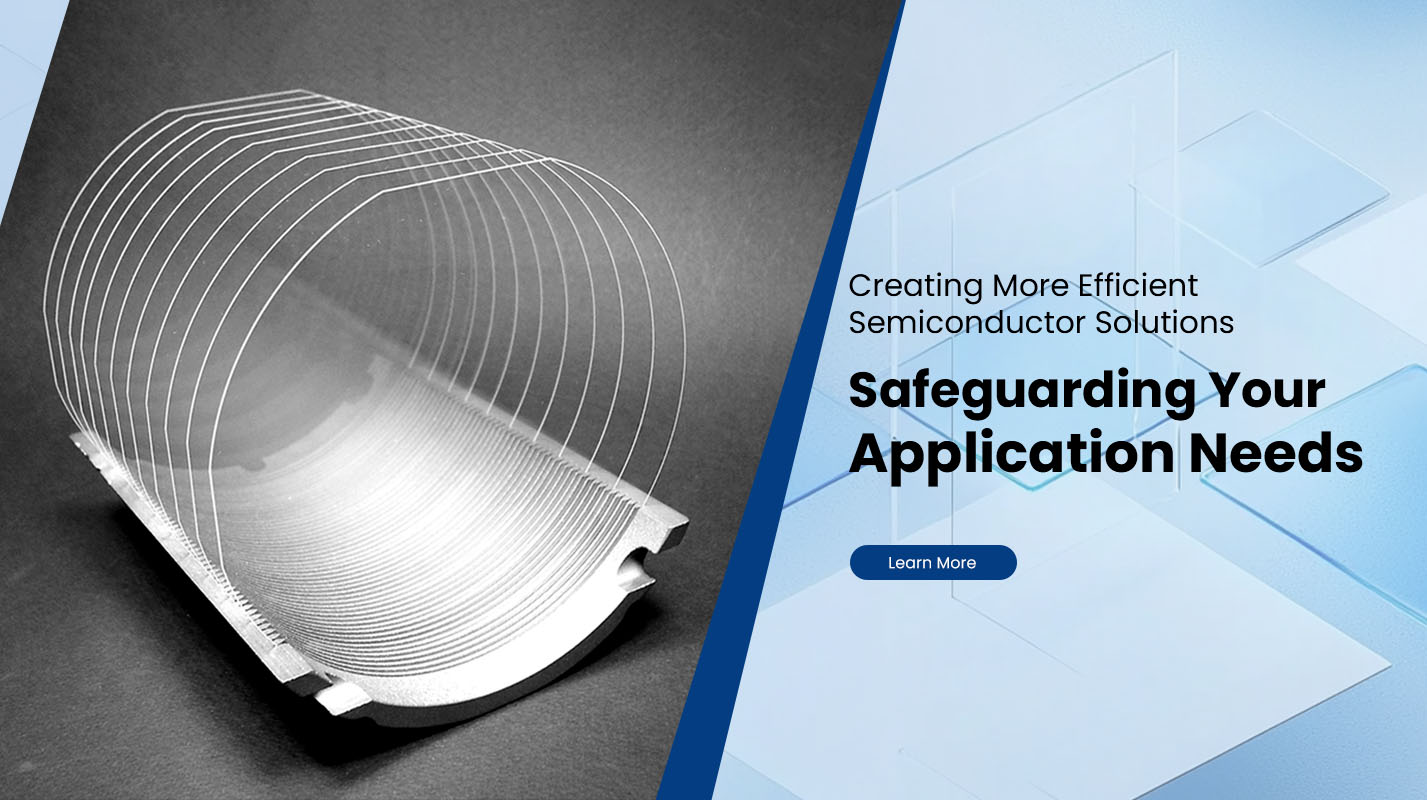
Glass Wafers can be customized when standard wafers do not match the design, bonding process, optical path, carrier function, or equipment fixture. Unlike simple glass sheets, semiconductor glass wafers need controlled diameter, thickness, surface finish, edge quality, flatness, cleanliness, and packaging. For buyers developing MEMS devices, optical sensors, microfluidic chips, display components, or wafer-level packaging parts, customization often decides whether the wafer can move smoothly into the next process.
Working with a custom glass wafer manufacturer is useful when the project needs a special substrate instead of a catalog item. Standard glass wafers commonly appear in 100 mm, 150 mm, 200 mm, and 300 mm formats, while some precision fabrication references show custom diameters can reach 450 mm and thin glass wafers can be produced down to 0.1 mm. This shows that glass wafer supply is not limited to one fixed size, but each custom requirement must be checked against material behavior and machining risk.
Customization Starts With Glass Material
Different glass materials are used for different reasons. Borosilicate glass is widely selected for MEMS, bonding, optical, and semiconductor-related work because it has good thermal stability and a coefficient of thermal expansion close to silicon. Technical data for BOROFLOAT 33 lists a thermal expansion coefficient of about 3.25 × 10⁻⁶ K⁻¹ from 20°C to 300°C, which is one reason this material is often considered for silicon-to-glass bonding.
Fused silica and quartz are often considered when optical transmission, high purity, low thermal expansion, or stronger thermal resistance is required. Soda lime glass may be suitable for less demanding carrier, display, or test applications where cost control is more important than high thermal performance. The right material should be selected according to process temperature, optical range, bonding method, chemical exposure, and inspection requirements.
Thickness Can Be Adjusted For The Process
custom glass wafer thickness is one of the most common requirements. A thicker wafer may provide better mechanical support during handling, bonding, and carrier use. A thinner wafer may be needed for optical transmission, compact device structure, or special assembly design. However, thin glass is more fragile, so thickness tolerance, edge quality, packing method, and handling instructions should be confirmed before production.
For example, a glass wafer used as a temporary carrier may need enough rigidity to support silicon during processing. A wafer used in optical sensing may need controlled thickness to maintain transmission consistency. A wafer used in microfluidic devices may require a stable thickness so the bonded channel structure remains predictable.
Diameter And Shape Can Follow Equipment Needs
Many buyers think customization only means changing the wafer diameter, but glass wafers can also be designed around tool compatibility. Diameter, notch, flat, alignment mark, edge profile, hole, slot, pocket, and special shape can all affect whether the wafer fits coating equipment, bonding tools, inspection systems, or customer fixtures.
When a drawing includes holes or pockets, the supplier should review machining stress carefully. Glass can crack if the hole edge, corner radius, or wall distance is not suitable. A practical supplier will not only quote the drawing, but also check whether the design can be produced with stable yield.
Surface Finish Affects Bonding And Inspection
Glass wafers can be supplied with different surface conditions, including polished, lapped, etched, or fire-polished surfaces depending on the material and application. For wafer bonding, optical inspection, and coating, surface roughness and flatness are critical. A smooth and clean surface can help reduce bonding voids, particle defects, coating streaks, and measurement errors.
Buyers should confirm whether they need single-side polishing or double-side polishing. Double-side polished glass wafers are often preferred when both sides are used for inspection, optical transmission, bonding, or coating. Single-side polishing may be enough when only one functional surface is required.
Cleanliness And Packaging Need Early Confirmation
Customized glass wafers are often more sensitive than standard stock wafers because the project may involve testing, device development, or a validated process. Clean packaging should protect polished surfaces from particles, scratches, moisture, and friction. Wafer boxes, cassettes, separators, clean bags, and shock-resistant outer cartons should be selected according to diameter, thickness, quantity, and shipping distance.
A project glass wafer supplier should also support clear labeling. Each batch should show material, diameter, thickness, surface finish, quantity, lot number, and inspection status. This helps buyers manage incoming inspection and repeat orders without mixing different versions of the same wafer.
What Buyers Should Provide Before Quotation
A clear inquiry saves time and reduces technical mismatch. Buyers should provide material type, diameter, thickness, tolerance, surface finish, flatness requirement, hole or slot drawing, edge requirement, cleaning level, order quantity, and target application. When the wafer will be used for bonding, coating, lithography, carrier support, or optical inspection, that process information should also be shared.
At Plutosemi, our team can review custom glass wafer requests based on material, size, thickness, polishing, machining, cleaning, and packaging needs. We supply glass wafers and other advanced substrates for semiconductor, MEMS, optical, sensor, research, and pilot production use. Our goal is to help customers turn design requirements into wafers that are practical to produce and stable to use.
Conclusion
Glass wafers can be customized in material, diameter, thickness, surface finish, edge profile, holes, slots, pockets, flatness, cleaning, and packaging. The right customization plan should not only match a drawing, but also support the downstream process.
When buyers confirm material behavior, process conditions, dimensional tolerance, and packaging details early, customized glass wafers become easier to control from sample evaluation to repeat supply.
Previous: What is Sapphire Wafer Used for?