
Why Choose JGS1 Fused Silica?
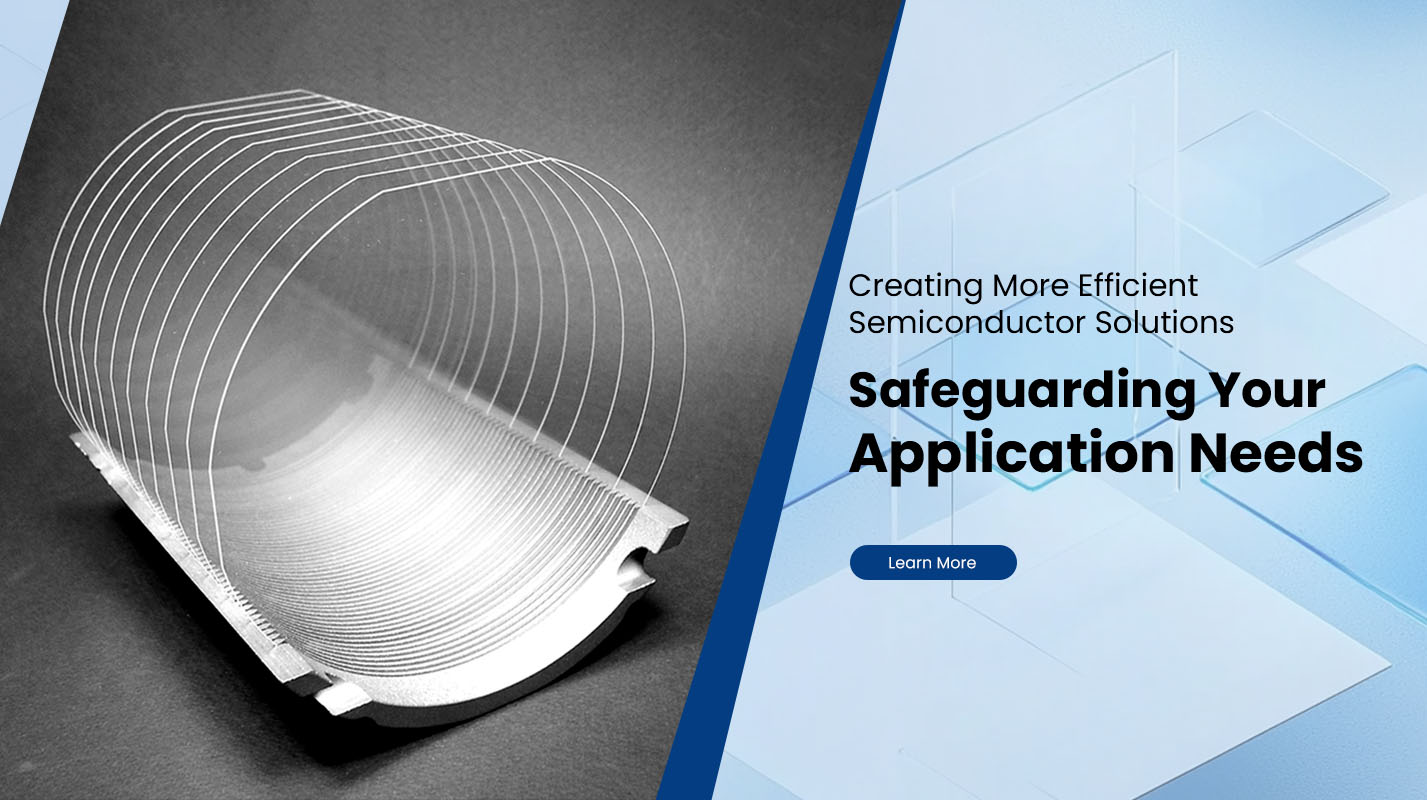
JGS1 fused silica is chosen when a wafer needs strong UV transmission, stable thermal behavior, low impurity influence, and a smooth optical-grade surface. For semiconductor, photonics, optical inspection, sensor, and laboratory processing, the substrate must remain clear, stable, and clean through handling, coating, bonding, or high-temperature steps. Plutosemi’s JGS1 product data shows sizes from 2 inch to 12 inch or customized, high-purity SiO₂ base material, density of 2.2 g/cm³, melting point of 1730°C, Mohs hardness of 7, and continuous safe operating temperature of 1000–1100°C.
Why JGS1 Works For Optical And Semiconductor Processes
JGS1 is a good choice when optical clarity and thermal stability must be considered together. Silicon Wafers are excellent for many device processes, but they are not transparent in the same way as fused silica. A JGS1 fused silica wafer gives a transparent, electrically insulating, and thermally stable platform for optical windows, UV-related testing, microfluidic chips, photonic structures, and precision carrier applications.
Plutosemi lists the applied spectral band range for JGS1 fused silica Glass Wafer as 0.185–2.5 μm. The same specification table also shows transmittance data for 10 mm thick blanks, including above 85% at several UV wavelengths for higher classifications.
Key JGS1 Quartz Wafer Specs
| Specification Item | Plutosemi JGS1 Data | Procurement Meaning |
|---|---|---|
| Base material | SiO₂ fused silica | High-purity optical substrate |
| Standard size | 2, 3, 4, 5, 6, 8, 12 inch | Flexible matching for tools |
| TTV | <5 μm to <15 μm by size | Supports flatness-sensitive work |
| Surface roughness | Ra <1 nm | Useful for coating and bonding |
| Ultra-flat option | TTV <1 μm | Supports precision process needs |
| Ultra-smooth option | Ra ≤0.2 nm | Supports demanding optical surfaces |
These JGS1 quartz wafer specs help buyers avoid ordering only by diameter. A wafer with the correct size but unsuitable TTV, roughness, or surface finish can still fail during lithography, coating, inspection, or bonding.
Surface Finish Should Match The Process
Surface finish is a major selection point. Plutosemi lists DSP, SSP, and DSL options for jgs1 glass wafers. DSP may be useful when both wafer sides matter for optical or bonding contact. SSP may be enough when only one side is used as the functional surface. DSL can support special optical or mechanical requirements where lapping quality is more important than mirror polish.
Optical systems need low scattering and stable transmission. Microfluidic or MEMS-related applications may care more about flatness, edge quality, and bonding surface condition. Semiconductor labs may use JGS1 as a carrier, window, mask support, or transparent substrate for process evaluation.
Why Customization Matters
Standard JGS1 wafers can support many projects, but custom requirements are common. Thickness, diameter, flatness, surface finish, edge profile, roughness, and packaging should be confirmed before production. Plutosemi states that JGS1 glass wafers are available in standard sizes and customized dimensions, with special indexes such as ultra-flat glass wafer, ultra-thin glass wafer, and ultra-smooth glass wafer.
A custom JGS1 wafer supplier should review both the wafer specification and the end process. High-temperature use, UV transmission, optical inspection, coating adhesion, and bonding all require different priorities. Over-specification may increase cost, while under-specification may create process instability.
Packing And Inspection
JGS1 wafers are fragile compared with metal or ceramic parts, so packing should protect against particles, scratching, vibration, and moisture. Plutosemi describes professional wafer box packaging, double-layer bag protection, vacuum packing, carton selection by size, and EPE foam protection. Quality inspection can follow SEMI standards or customer requirements, together with product COA.
Final Notes
Reliable JGS1 selection depends on optical band range, SiO₂ purity, size, thickness, TTV, roughness, polishing method, and packing. Plutosemi can support JGS1 fused silica wafer orders with standard and customized specifications for optical, semiconductor, photonics, and laboratory processes.