
Can Glass Wafers Match Silicon for Mechanical Reliability and Handling?
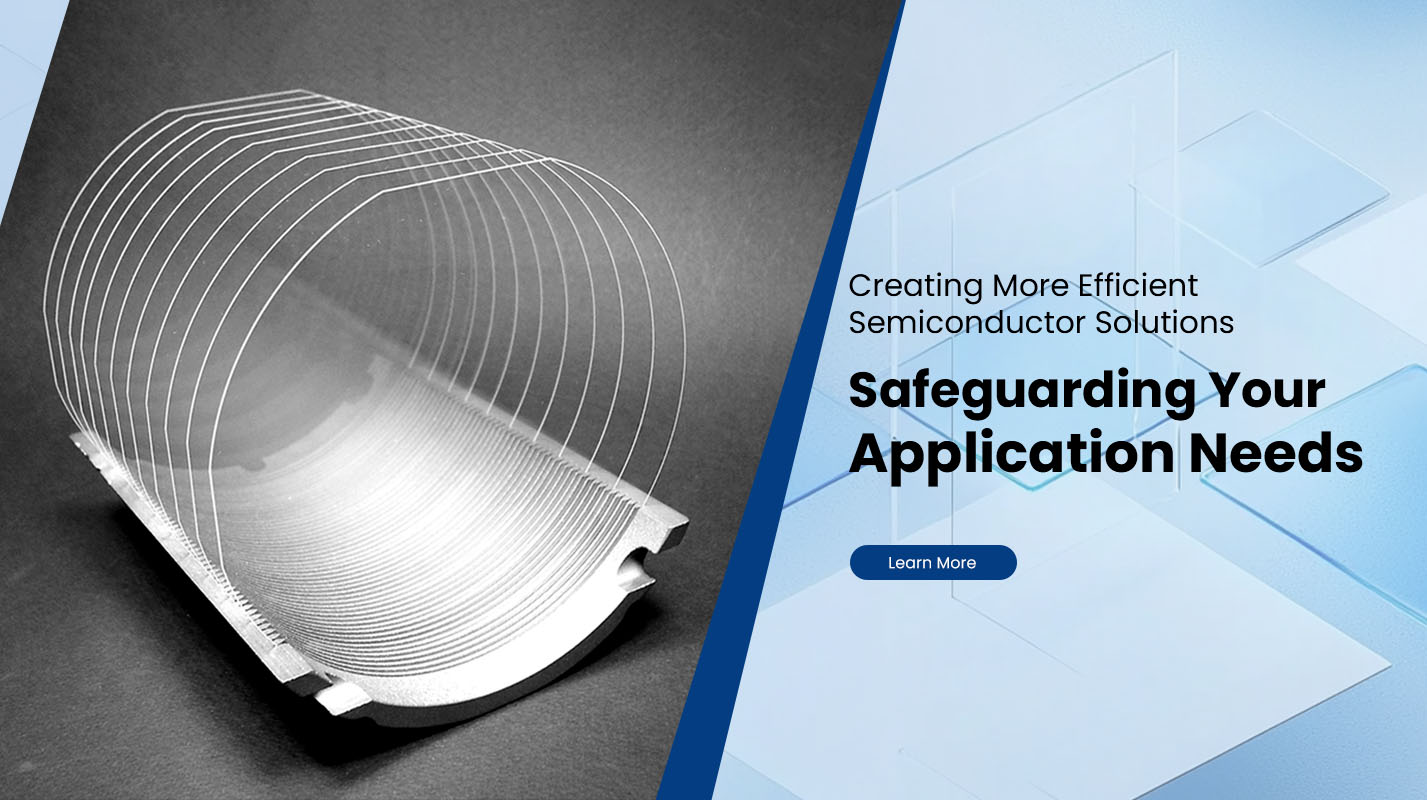
Glass Wafers are increasingly used in semiconductor packaging, optics, MEMS, sensors, and advanced 3D integration. As device structures become thinner and more thermally demanding, the comparison between glass wafers and traditional silicon substrates has intensified. The core question many engineering teams ask is whether glass wafers can match silicon in mechanical reliability and handling performance during fabrication, thinning, dicing, bonding, and system-level assembly. Understanding this comparison is essential for choosing the right substrate for high-precision and high-volume manufacturing environments.
Mechanical Strength and Reliability
While silicon has long been trusted for its predictable mechanical characteristics, glass wafers have evolved through specialized manufacturing technologies that improve strength, flatness, and stress control. Their isotropic structure eliminates crystal-direction weaknesses, which gives glass a more uniform response under stress. This results in stable mechanical behavior during thermal cycling, vacuum processing, and grinding.
In typical reliability evaluations, modern glass wafers can reach flexural strength levels appropriate for MEMS and packaging processes. Their performance is especially stable when the wafer thickness is reduced. Silicon exhibits strength changes depending on crystal orientation and defect density, which can introduce handling risks during deep thinning. Glass remains structurally consistent across the entire wafer, reducing unexpected breakage.
Some manufacturers also provide toughened or chemically strengthened glass wafers. These variants show significantly improved surface durability, lowering the likelihood of edge chipping or crack formation during wafer-level packaging steps. With proper specification control, glass can deliver performance equivalent to, and in certain cases surpassing, silicon substrate reliability.
Process Handling Performance
During photolithography, TSV formation, coating, and bonding, wafer handling stability is critical. Glass wafers offer advantages because they maintain dimensional stability under temperature and humidity variations. Their coefficient of thermal expansion can be matched closely to various device materials, mitigating warpage and improving overlay alignment.
Silicon remains superior in processes that require extremely high mechanical modulus, but most backend and packaging lines no longer rely solely on rigid modulus strength. Instead, uniformity and predictability are more important. Glass substrates excel in maintaining stable wafer geometry, especially when used as carriers in temporary bonding systems.
Glass wafers also show reduced particle generation during mechanical contact. Because their surfaces can be polished to very low roughness values, particle contamination is minimized, improving yield for advanced packaging facilities.
Comparison Table: Silicon vs. Glass for Mechanical Handling
| Attribute | Silicon Wafer | Glass Wafer |
|---|---|---|
| Structural consistency | Direction-dependent mechanical behavior | Isotropic and uniform |
| Flexural strength | High but varies with defects | Stable and tunable through strengthening |
| Breakage risk when thinned | Increases significantly | Lower due to uniform stress distribution |
| Thermal expansion behavior | Fixed for silicon crystal | Can be customized based on glass type |
| Suitability for carrier use | Common but more brittle under stress | Excellent due to stability and low warpage |
Suitability for Advanced Packaging
As microelectronics shift toward hybrid bonding, fan-out processes, and 3D stacking, substrate requirements become more demanding. Glass wafers provide dimensional precision that benefits fine-pitch interconnects and active alignment packaging. Their low dielectric loss also supports high-frequency applications, making them attractive for RF modules and optical systems.
Silicon remains essential for active semiconductor layers, but for interposers, carriers, and optical MEMS, many design teams now prefer glass due to its reliability during handling. The substrate does not introduce directional stress that could affect bonding uniformity or cause pattern deformation.
The ability to tailor glass properties—such as expansion, transmission, or chemical durability—gives manufacturers greater flexibility to match the substrate to the device architecture. This adaptability strengthens mechanical reliability across different production environments.
Considerations for Production Teams
When selecting between silicon and glass wafers, teams should evaluate the following factors as part of substrate decision planning.
Required wafer thickness
If devices require ultra-thin support, glass offers more stable behavior during thinning and transport, especially below 200 micrometers.Thermal cycling conditions
Glass types can be selected to minimize thermal stress buildup, protecting interconnect structures during repeated temperature changes.Bonding requirements
For hybrid bonding, fusion bonding, or adhesive bonding, the low-warpage characteristic of glass reduces alignment drift and improves bonding strength.Handling frequency
If wafers undergo multiple pick-and-place or lithography steps, glass’s lower edge-damage rate contributes to higher operational yield.Electrical and optical integration needs
Glass allows optical windows, waveguides, or RF-optimized areas to be integrated directly into the substrate.
Industry Adoption and Support
Many advanced packaging lines now consider glass a reliable alternative to silicon for mechanical handling. Material suppliers continue to expand their glass wafer portfolio with improved thermal stability, stress-relieved structures, and precision-polished surfaces. This development trajectory ensures that glass wafers can match or exceed silicon’s reliability for backend processing tasks.
Plutosemi provides engineered glass wafer solutions designed for high-precision semiconductor and MEMS applications. Their materials support consistent mechanical reliability, stable handling, and advanced customization for optical or electronic integration, making them a valuable partner for companies transitioning toward glass-based substrates.
Conclusion
Glass wafers can indeed match silicon in mechanical reliability and handling when properly selected and processed. Their isotropic structure, dimensional stability, and tunable material characteristics give them strong advantages for modern semiconductor packaging, temporary bonding, and optoelectronic production. As manufacturing requirements shift toward thinner, lighter, and more thermally stable substrates, glass continues to grow as a trusted option alongside traditional silicon.
For engineering teams evaluating new substrate strategies, glass wafers present a mechanically reliable and process-friendly alternative capable of supporting next-generation device architectures.