

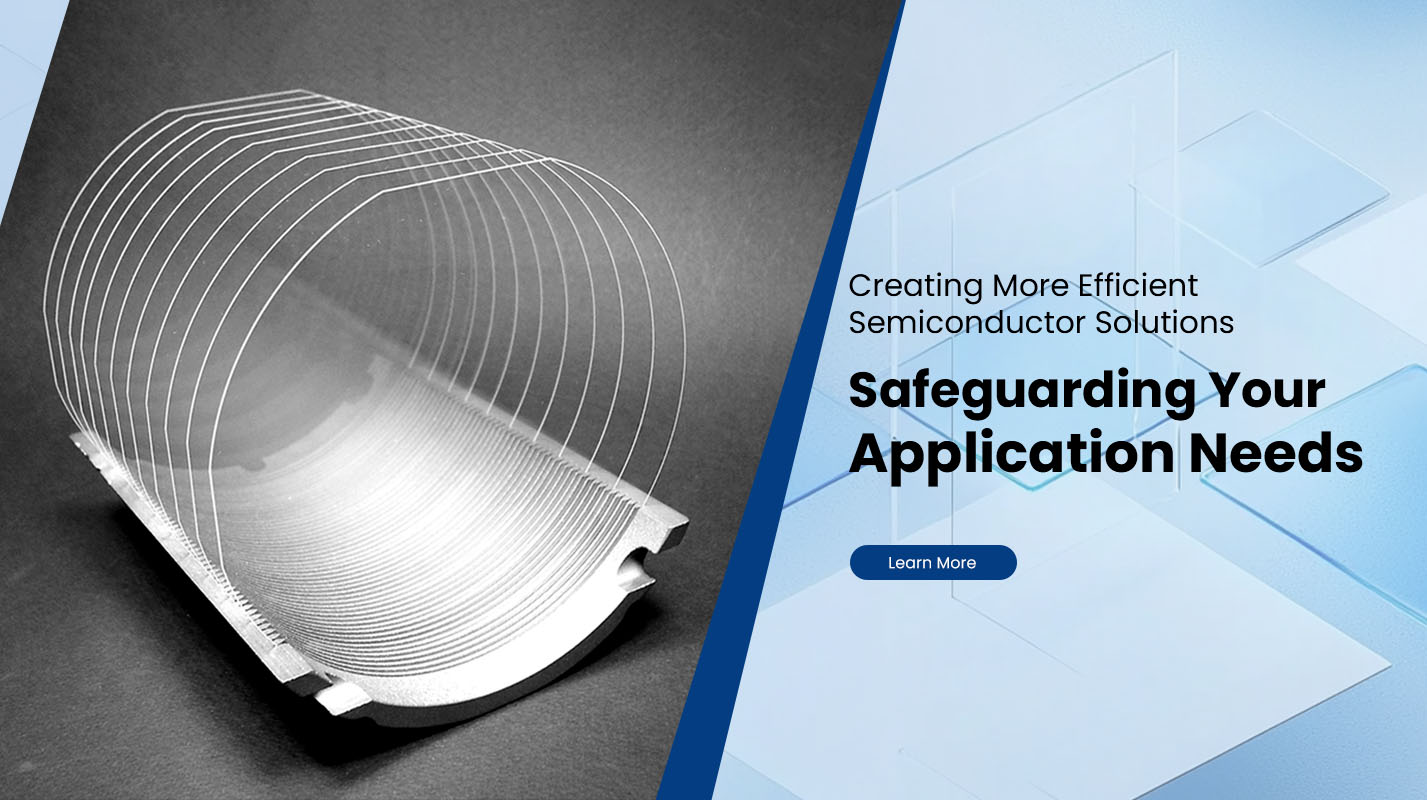
What Should a Wafer Supplier Provide?
Selecting wafers is not only about finding the right diameter and material. A qualified wafer supplier should help buyers confirm specifications, reduce process risk, and maintain stable quality from sample testing to repeat purchasing. For semiconductor, MEMS, optical, sensor, and research applications, wafer consistency can directly affect inspection accuracy, film deposition, bonding performance, and device yield.
A strong semiconductor wafer supplier service should provide more than products. It should include technical review, material traceability, inspection support, customized processing, safe packaging, and reliable delivery planning.
Clear Material Options
The first thing a wafer supplier should provide is a clear material range. Different applications may require silicon, SOI, quartz, fused silica, sapphire, SiC, GaAs, glass, or other advanced substrates. Each material has different thermal behavior, hardness, optical performance, electrical properties, and processing difficulty.
Plutosemi supplies multiple wafer materials for semiconductor and advanced substrate use, including Silicon Wafers, EPI wafers, SOI wafers, crystal quartz, fused silica, Borofloat glass, sapphire, SiC, and GaAs. This material range helps customers match wafers to lithography, coating, bonding, optical, sensor, and research requirements.
Accurate Specification Confirmation
A reliable wafer material supplier should not accept an order only by product name. The supplier should confirm every critical parameter before production, because small specification gaps may create large downstream problems.
Important specifications usually include:
Wafer material and grade
Diameter and thickness
Crystal orientation
Dopant type and resistivity
Single-side or double-side polishing
Surface roughness
TTV, bow, and warp
Flat or notch requirement
Edge profile
Cleaning grade
Packaging method
SEMI M1 covers ordering information and certain requirements for high-purity electronic-grade polished single crystal silicon wafers used in semiconductor device and integrated circuit manufacturing. This shows why detailed wafer specifications are not optional during purchasing.
Inspection Data And Quality Records
Buyers need measurable data, not only verbal promises. A professional supplier should provide inspection information based on the confirmed order requirements. For silicon wafers, common reference thickness values include about 525 μm for 4-inch wafers, 675 μm for 6-inch wafers, and 725 μm for 8-inch wafers. Final tolerance should still follow the customer drawing or agreed specification.
The supplier should support inspection records for key items such as thickness, resistivity, orientation, surface condition, TTV, bow, warp, and visual defects. For higher-end applications, additional testing may be needed for particles, roughness, oxide thickness, or special coating requirements.
| Supplier Document | Why It Matters |
|---|---|
| Specification sheet | Confirms material, size, tolerance, and surface finish |
| Inspection report | Helps buyers verify incoming quality |
| Lot traceability record | Supports repeat orders and problem tracking |
| Packaging label | Reduces warehouse and process confusion |
| Custom drawing review | Prevents mismatch before production |
Custom Processing Capability
Many buyers do not need only standard wafers. They may need ultra-thin wafers, ultra-thick oxide wafers, high-resistivity wafers, abnormal shapes, small batch research wafers, or special polishing requirements. A supplier with processing capability can help turn application needs into workable specifications.
Plutosemi can support customized wafer processing based on material type, size, thickness, surface finish, and application needs. Our team can review whether the requested tolerance is suitable for the wafer material and production route, helping customers avoid over-specification that increases cost or under-specification that increases failure risk.
Stable Packaging And Safe Delivery
Wafer quality can be damaged after inspection if packaging is poor. A qualified supplier should provide suitable wafer boxes, cassettes, separators, clean bags, vacuum packaging, or dry packaging depending on the material and surface condition.
For polished wafers, front surfaces should be protected from particles, scratches, vibration, moisture, and direct hand contact. Thin wafers and brittle substrates need extra care because edge chips, cracks, and stress marks may appear during transport. Good packaging also improves warehouse management because each box should clearly show lot number, wafer size, quantity, material, and surface finish.
Practical Qualification Checklist
A wafer supplier qualification checklist should help buyers judge both production capability and service reliability. Before placing an order, buyers can review the following points:
Does the supplier understand the target application?
Can the supplier confirm material grade and crystal requirements?
Are thickness, TTV, bow, and warp clearly defined?
Can inspection data be provided before shipment?
Is customization available for samples and repeat orders?
Is packaging suitable for clean and fragile wafer handling?
Can the supplier maintain batch consistency?
Is communication fast enough for engineering changes?
This checklist helps buyers avoid choosing a supplier based only on price. Lower unit cost may become expensive if wafers fail incoming inspection or require repeated process adjustment.
What Plutosemi Provides
Plutosemi focuses on semiconductor wafers and advanced substrate supply. Our team can provide material selection support, specification review, customized processing, inspection confirmation, clean packaging, and batch delivery coordination. We serve customers working on semiconductor devices, MEMS, optics, sensors, universities, laboratories, and pilot production.
A good wafer order should be clear before manufacturing starts. We help customers confirm drawings, application requirements, surface finish, flatness targets, and packaging details so the delivered wafers are easier to use in the next process step.
Conclusion
A wafer supplier should provide more than inventory. The right partner should offer material knowledge, engineering communication, inspection support, packaging protection, traceability, and stable batch service. When a supplier can connect wafer specifications with real process needs, buyers can reduce incoming quality risk and build a more reliable purchasing workflow.