
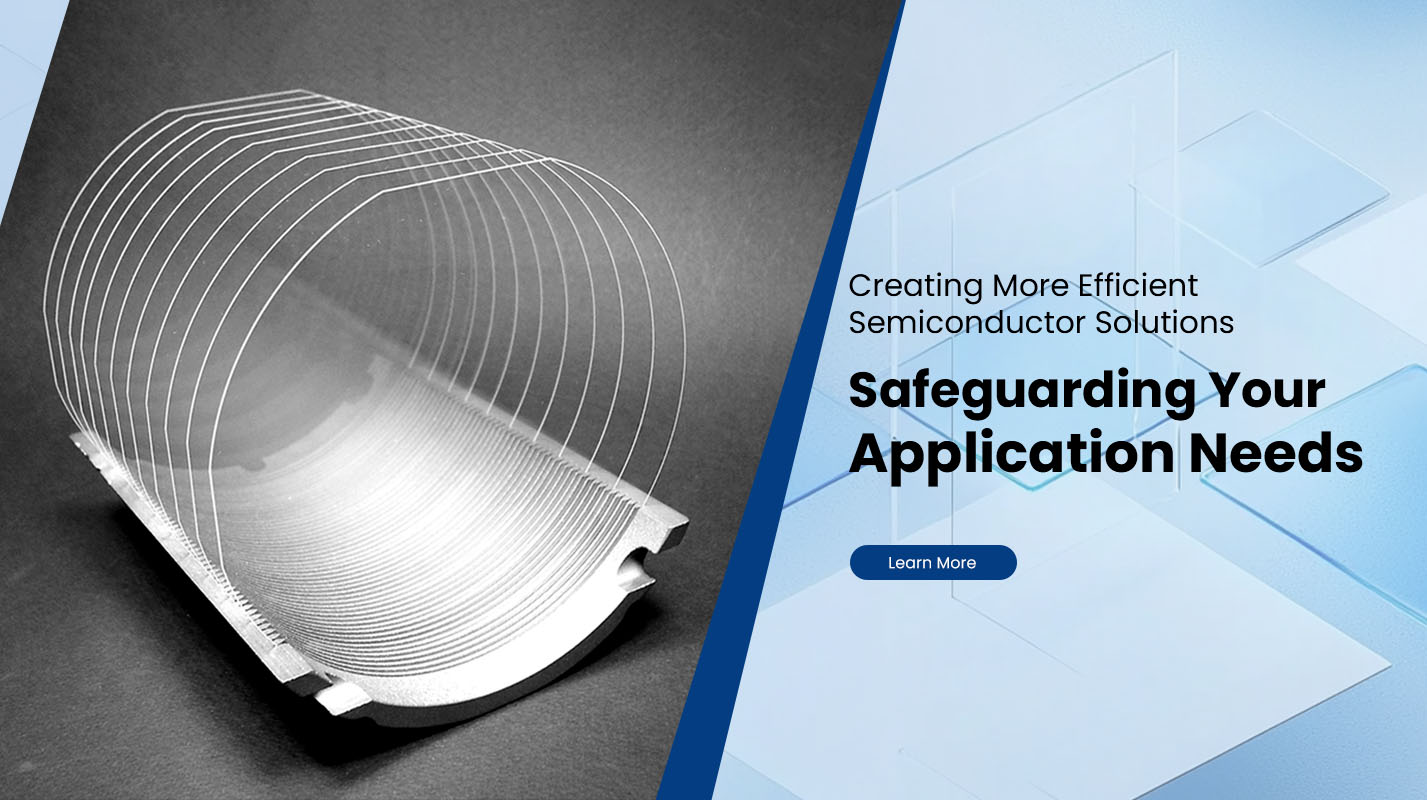
Sapphire wafers are used in industries that require optical transparency, electrical insulation, mechanical hardness, chemical resistance, or stable operation at elevated temperatures. Their applications extend beyond LED production into optics, RF electronics, sensors, MEMS, medical equipment, and research.
-
2026-08-26
-
2026-08-26Wafer purity affects carrier lifetime, leakage current, breakdown behavior, resistivity stability, film growth, and long-term device reliability. Trace metallic, ionic, or carbon-related contamination can introduce unintended electrical states even when the wafer appears visually perfect.
-
2026-08-25Epitaxial layer quality is affected by the substrate surface, crystal defects, reactor cleanliness, growth temperature, gas flow, pressure, deposition rate, dopant control, and cooling conditions. The layer must follow the crystal structure of the underlying wafer while maintaining the specified thickness, resistivity, composition, and defect density.
-
2026-08-25Low resistance silicon wafers are heavily doped substrates designed to conduct electrical current with minimal resistive loss. Their low resistivity makes them useful in power semiconductor devices where current must pass through the wafer thickness.
-
2026-08-24Wafer surface roughness affects thin-film uniformity, photolithography, epitaxial growth, wafer bonding, optical scattering, and nanoscale measurement. Roughness describes microscopic height variations across a surface rather than the wafer’s overall bow or flatness.
-
2026-08-24Glass wafers are used in MEMS because they provide electrical insulation, optical transparency, chemical resistance, dimensional stability, and compatibility with wafer-level bonding. They can act as caps, carriers, spacers, microfluidic layers, optical windows, or interposers.
-
2026-08-22Sapphire supports optical devices through its wide transmission range, high hardness, thermal stability, and resistance to chemical attack. Synthetic sapphire is a single-crystal form of aluminum oxide that can function as both an optical transmission medium and a protective structural component.
-
2026-08-22Glass materials used for TGV must support precise via formation, stable metallization, low electrical loss, and reliable thermal cycling. Borosilicate glass, alkali-free glass, fused silica, and other engineered glass compositions can all be considered, but their coefficients of thermal expansion, dielectric properties, thickness, and laser response are different.
-
2026-08-22Reducing wafer processing defects requires control from raw-material selection through cutting, grinding, polishing, cleaning, inspection, and packaging. Defects rarely come from one isolated operation. Scratches, pits, particles, chips, thickness variation, bow, and subsurface cracks often develop through several connected process conditions.
-
2026-08-21Suitable wafer size depends on processing equipment, device dimensions, material availability, production volume, and the cost of maintaining acceptable yield. Larger wafers can hold more devices, but they are not automatically the most economical option.
-
2026-08-21Wafer pricing is determined by the interaction of material type, diameter, thickness, orientation, surface finish, geometric tolerances, processing complexity, inspection level, and order quantity. Two wafers with the same diameter may have very different costs when one requires standard polishing and the other requires tight TTV, ultra-low roughness, custom shaping, and detailed inspection.
-
2026-08-21Sapphire wafer defects can originate from crystal growth, slicing, grinding, polishing, cleaning, packaging, or improper handling. Some defects are inherited from the sapphire boule, while others are introduced during wafer processing.